
The Foundation of Security in the Digital Age: Why Identity and Access Management Is a Strategic Necessity
In an era where cyber threats target businesses of every size, why has Identity and Access Management become a strategic necessity?
The Foundation of Security in the Digital Age: Why Identity and Access Management Is a Strategic Necessity
Cyber threats are no longer a concern exclusive to large corporations — they are a critical challenge facing businesses of every size. All it takes for a malicious actor to infiltrate your systems is a single forgotten user account or a password that is not strong enough.
In an era where data is considered the most valuable asset, "Who is this person and what resources can they access?" is a question that must sit at the heart of every organization's security strategy.
Why Identity and Access Management (IAM)?
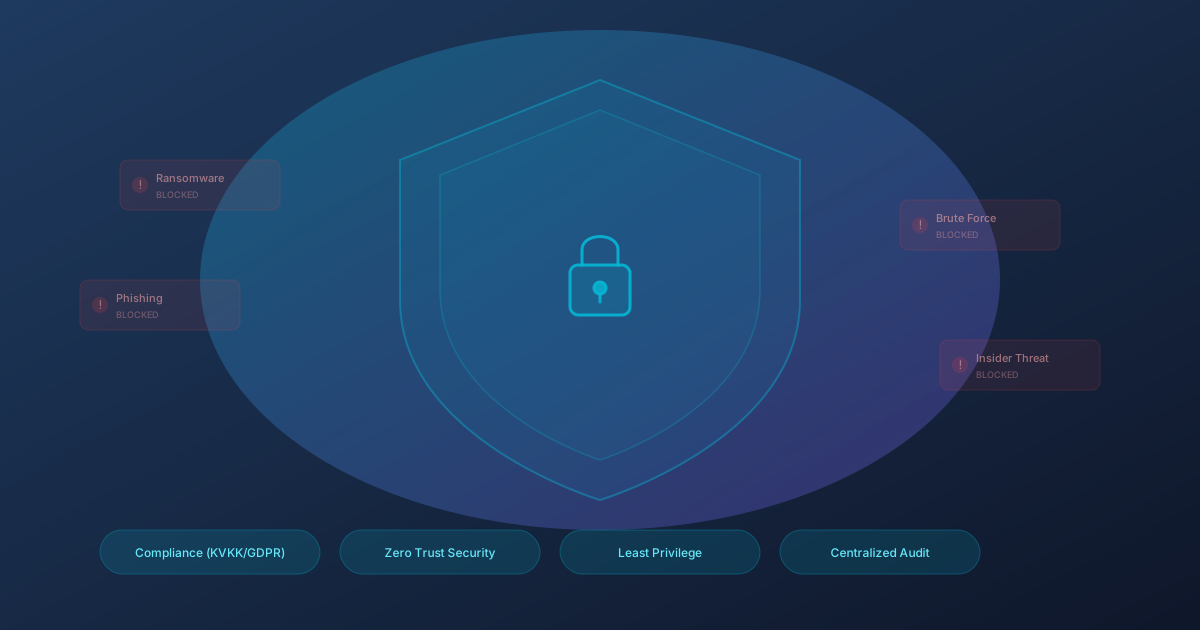
The most effective line of defense against threats such as ransomware, phishing attacks, and insider breaches is a properly structured identity management strategy. If you cannot verify whether the person entering your system is truly authorized, even the most sophisticated firewall becomes meaningless.
IAM (Identity and Access Management) is a framework that centrally manages all digital identities within your organization, controlling who accesses which system, when, and with what level of authorization.
Key Benefits IAM Delivers to Organizations
1. Prevention of Unauthorized Access
Each user is granted only the access permissions their role requires. This principle of least privilege significantly narrows the attack surface in the event of a compromised account.
2. Regulatory Compliance
Regulations such as Turkey's KVKK (Law No. 6698) and the EU's GDPR mandate that access to personal data be kept under strict control. IAM systems naturally meet these legal requirements by providing audit trails and access logs.
3. User Lifecycle Automation
When an employee joins the company, changes departments, or leaves the organization, accounts and permissions are automatically updated. This not only improves operational efficiency but also eliminates security vulnerabilities caused by orphaned accounts.
4. Password Security and Multi-Factor Authentication (MFA)
Traditional username and password combinations are no longer sufficient against today's sophisticated attacks. Brute-force attacks, phishing emails, and leaked password databases are among the biggest vulnerabilities of simple authentication methods. MFA creates a strong barrier against these threats by requiring multiple verification steps to access a system.
5. Centralized Management and Visibility
Managing all user accounts, roles, and access permissions from a single point provides IT teams with complete visibility. Who can access what, when they last logged in, what permissions they hold — the answers to all these questions become instantly visible.
Conclusion
Identity and Access Management is more than an IT project for modern businesses — it is a strategic security investment. A properly configured IAM solution both strengthens your defense against cyber threats and streamlines your regulatory compliance processes.
Security is not a luxury but a right of every organization. What matters is taking the right steps at the right time.